
The first thing I read upon returning home to Japan last September, after nearly a month travelling and seeing family in the UK, was a mid 19th century tale that kept cropping up in my research into the history of Japanese science fiction. Some literary historians hold this tale up as an early, if not the earliest, example of the genre in the archipelago.1 What a ticklish surprise, then, to learn that the climax of the story is the annihilation of the very European nation I had just visited.
A Feel Good Tale of Conquering the West (西征快心編)—later to be retitled Chronicle of Conquering Britain (英国征服記)—was penned by Confucian scholar Gesshu Iwagaki (巌垣月洲, 1808-1873) in 1857. The 1850s was a tumultuous transitional period for Japan in which the long-reigning feudal regime known as the Tokugawa shogunate was in the process of collapsing, a national crisis precipitated by the arrival in 1853 and again in 1854 of the infamous black ships.
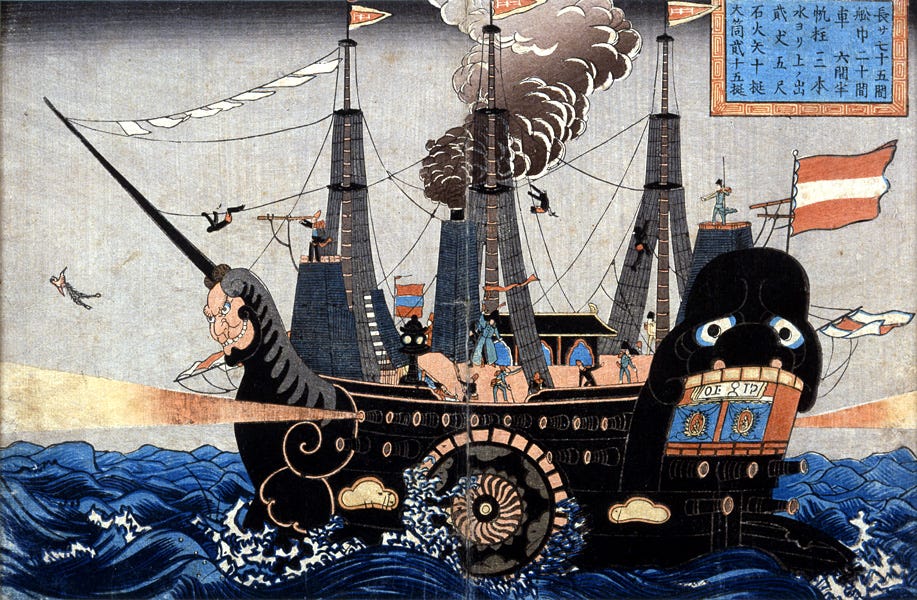
This American military fleet was under the command of Commodore Mathew Perry (1794-1858), a career navy man who was on a mission to force Japan to open its ports to the USA and end the closed island policy that had isolated it from most of the world for over two centuries. The shogunate, already destabilized by ongoing financial woes and social unrest, with its single-sail junks pitted against steam engines flaunting guns and cannons, had no choice but to eventually concede under threats of violence.
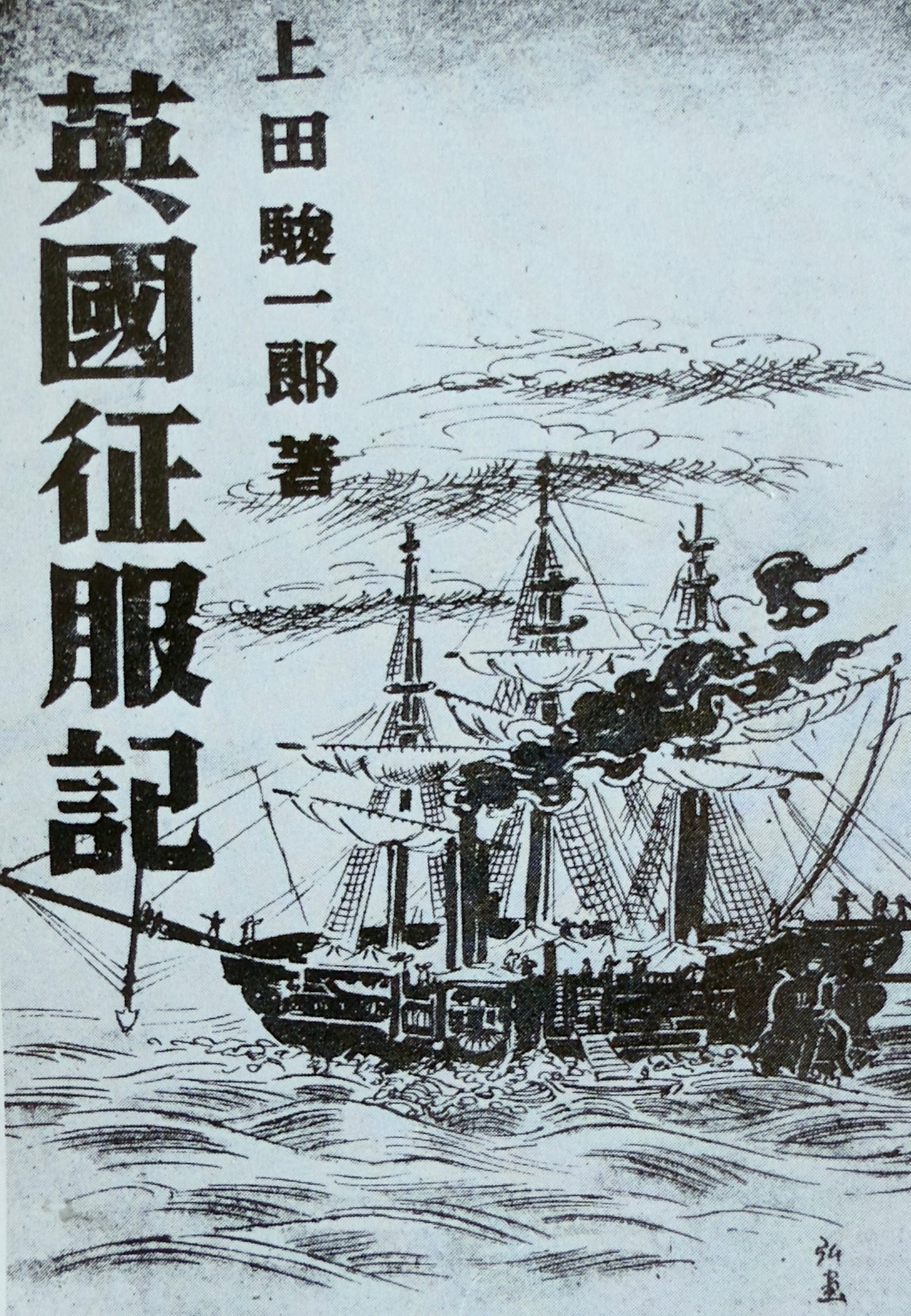
The story begins when Koka’s deputy shogun, Kodo Koko (based loosely on the historical lord of Mito Tokugawa Nariaki) receives word via Dutch allies that China is being oppressed by the British after its defeat in the First Opium War (1839-1842). Kodo quickly proposes to the shogun that they liberate their Asian neighbour and overthrow the British barbarians. He then assembles an army of 8,000 samurai and a military fleet, including ships powered by steam technology that the historical Japan did not then possess,2 and embarks at the beginning of the lunar year in 1857.
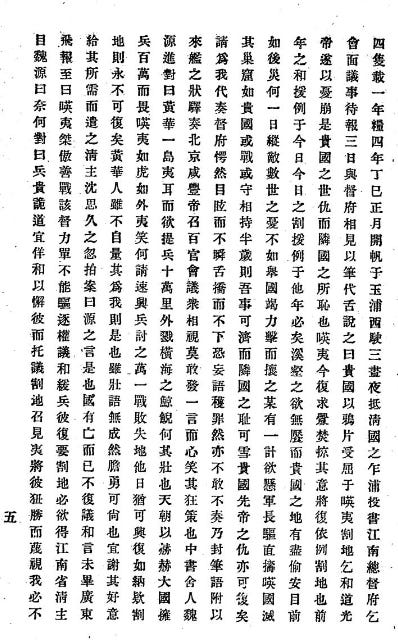
Upon landing in China, Kodo makes diplomatic overtures to the Qing Emperor and convinces him to rally his forces against the British as a distraction while the Kokan fleet invades the homeland. The resulting war succeeds in siphoning reinforcements from British colonies in India, to which Kodo next sails. Once the fleet has put down anchor near Ceylon, Kodo personally leads a small party of interpreters disguised as Chinese merchants to Bombay, where they spreads rumours that the British have been routed in China and thereby trick the colonial authorities into dispatching yet more reinforcements. Kodo and his men then make swift work of the few soldiers that remain and purge India of the British with the help of a mob. The Indian people now roused, Kodo is able to persuade the Mughal Emperor to regain his self-respect and fend off any Brits that attempt to reestablish themselves in his dominion.
Assured that the great empires of Asia are taking part in his master scheme and dividing enemy forces in the east, Kodo at last embarks for England. The Kokan fleet encounters many British ships heading the other way, so they decide to travel only by night, hiding in the shadow of small islands by day.
Meanwhile, word of the turmoil in China and India reach Queen Victoria. Against her council’s urgings, she divides further reinforcements between China and India, then when word of military failures arrive, dispatches the entire British fleet to quell the uprisings. Tricked by Kodo’s diversions, the queen has left Britain ripe for the taking.
The Kokan fleet is by now hiding on an island near England. “Tomorrow we fight the British barbarians for the first time,” Kodo tells his men. “Fear not death, let your swords shine, and mark your names in this foreign land.”
Making landfall, the Kokans seize the port, and ambush London. Samurai hordes storm the capital, set the city and palace ablaze, spread rumours to disorient resistance, take Queen Victoria, her ministers, and other members of the royal family hostage, and use them as human shields while routing the encircling troops gathered from across Great Britain.
Oh sweet vengeance! But hold on. Why, you might be wondering, is the villain of this tale the British when it was America that humiliated Japan by muscling into the archipelago with the black ships? Gesshu might have just as easily told a yarn about sacking Capitol Hill.
Some critics have suggested that he would have faced dangerous blowback for being too on the nose about a vendetta against America. These were fractious times in which the authoritarian political order was crumbling and Japan was split on how to respond to the increasingly frequent arrival of European ships. Indeed, there is evidence that the author was nearly assassinated the year he wrote A Feel Good Tale of Conquering the West, saved only thanks to the intervention of a friend.
The most obvious reason to choose Britain rather than the USA, however, is that the former was the preeminent global superpower in the mid 19th century, while the latter was still considered something of a backwater by European standards. What could be more gratifying than to defeat the nation that symbolized the pinnacle of the technological advancements that had so recently been the source of Japan’s humiliation and the humiliation of a civilization, China, that it had for over a millennia sought to emulate?
When the dust settles, Kodo summons the rulers of the local European nations and holds a conference in the ashes of the palace to decide the fate of Britain. They all agree that Queen Victoria and the British royal family are too morally depraved to be trusted to rule again, so the land is divided into four (perhaps representing England, Scotland, Ireland, and Wales), each to be ruled over by the supposedly benevolent princes of France, Germany, Russia, and Holland. Kodo then hands over the queen and other hostages to the Europeans, asking them to “dispose of them such that they do not rise again like Napoleon.” The elimination of the British ruling order and of Britain as a distinct nation makes the world a better place for everyone.
Once the fate of expropriated British lands have been decided, Kodo takes no spoils and returns, celebrating Koka’s virtuous triumph across the seven seas. The nation of Koka is so above ambition and profit-seeking that it initially refuses even the sumptuous gifts that Asian and European emissaries bring as tribute, only accepting them reluctantly in the end to save face.
In this depiction of Japan as the heroic liberator of Asia, we can locate the seeds for later Japanese colonialism and fascism. The idea of Japan’s noblesse oblige to emancipate and protect weaker nations from the great powers of Europe would be coopted by right wing imperialists in the 20th century as justification for military expansion and to prop up the notion of the Greater East Asia Co-Prosperity Sphere, a utopian vision that bears comparison to the Nazi ideal of the Thousand Year Reich.
But Gesshu could not have had even an inkling of such future misappropriations of Asian comradery vis-a-vis the West. In his vision, Japan is still constrained by Confucian moral virtues rather than the European-style rapacity it would soon adopt in its sprint to modern statehood.
In the decades after the arrival of the black ships, science fiction would come to play a crucial role in that sprint to statehood, especially via translations of Jules Verne, by introducing the pre-modern imagination of Japan to then cutting edge technologies and radical political ideas. A Feel Good Tale of Conquering the West no doubt played its own part in this cultural awakening. But is it science fiction as some literary historians have claimed?
The answer, of course, depends on what we mean by “science fiction.” Some would date the origin of Japanese sci-fi as far back as the Bamboo Cutter’s Tale, also known as Princess Kaguya, a 9th or 10th century folk tale about a baby girl found by peasants inside a piece of bamboo who turns out to be from the moon. Others date it as far forward as the 1954 film Godzilla.
The status of the 1857 A Feel Good Tale of Conquering the West as as the first ever work of Japanese SF seems to rest on the following claims:
It engages in imaginative extrapolation with technologies then unavailable in Japan (though available in the West)
It is set in an alternate world. In particular, it as an example of alternate military history, which would come to occupy a prominent place in Japanese storytelling.
Whatever the genre of A Feel Good Tale of Conquering the West, I think it has potential to be a great film, a sort of mash-up between Martin Scorcese’s Silence and Pirates of the Carribbean. Or better yet, a follow up to Django Unchained and Inglorious Bastards. If anyone has a line to Quentin Tarantino, tell him I’m dying to see Queen Victoria taste cold samurai steel on the big screen. I’ll even write him a film treatment.
1: I refer to Japanese sci-fi history pioneers Junya Yokota and Yasuo Nagayama, whose work I consulted in writing this essay, among other sources.
About The Author
 Eli K.P. William is the author of The Jubilee Cycle (Skyhorse), a trilogy set in a dystopian future Tokyo, and a translator of Japanese literature, including most recently the bestselling memoir The Traveling Tree (Hachette) by renowned photographer Michio Hoshino. He also writes in the Japanese language, serving as a story consultant for a well-known video game company, and contributing short stories to such publications as a 2025 anthology put out by Japan’s largest sci-fi publisher. His translations, essays, and works of fiction have appeared in Granta, Aeon, Monkey, and more.
Read Eli’s full bio.